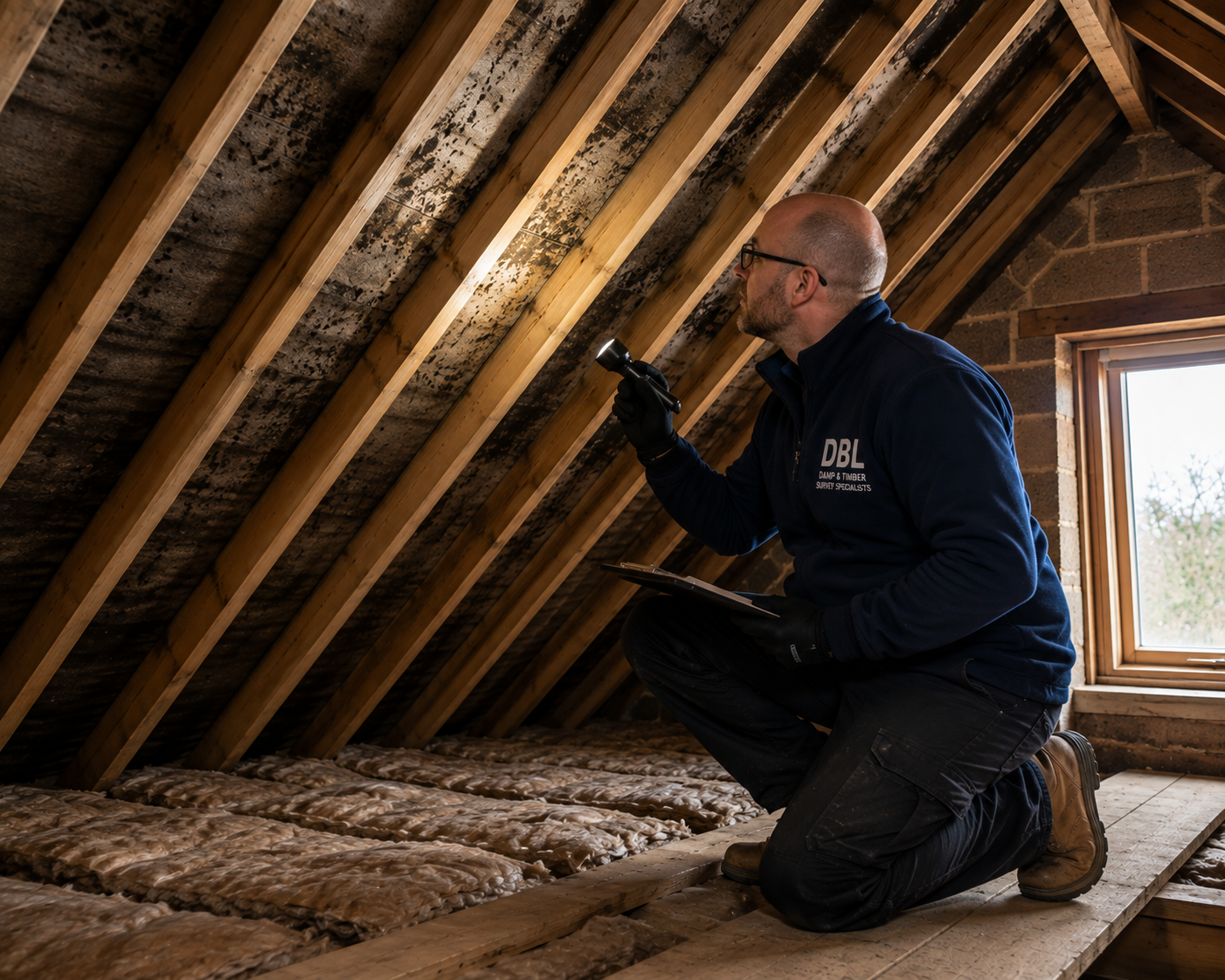
WOODWORM CONTROL THAT PROTECTS YOUR TIMBER.
Wood-boring insects can cause significant damage to structural and decorative timber when left untreated. Our specialists identify the type and extent of the infestation and provide targeted woodworm treatment to protect your property from further damage.
We stop the rot
- Identify Problems Early
- Expert Damp & Timber Surveys
- Effective Treatments
- PCA Registered Experts
What causes woodworm?
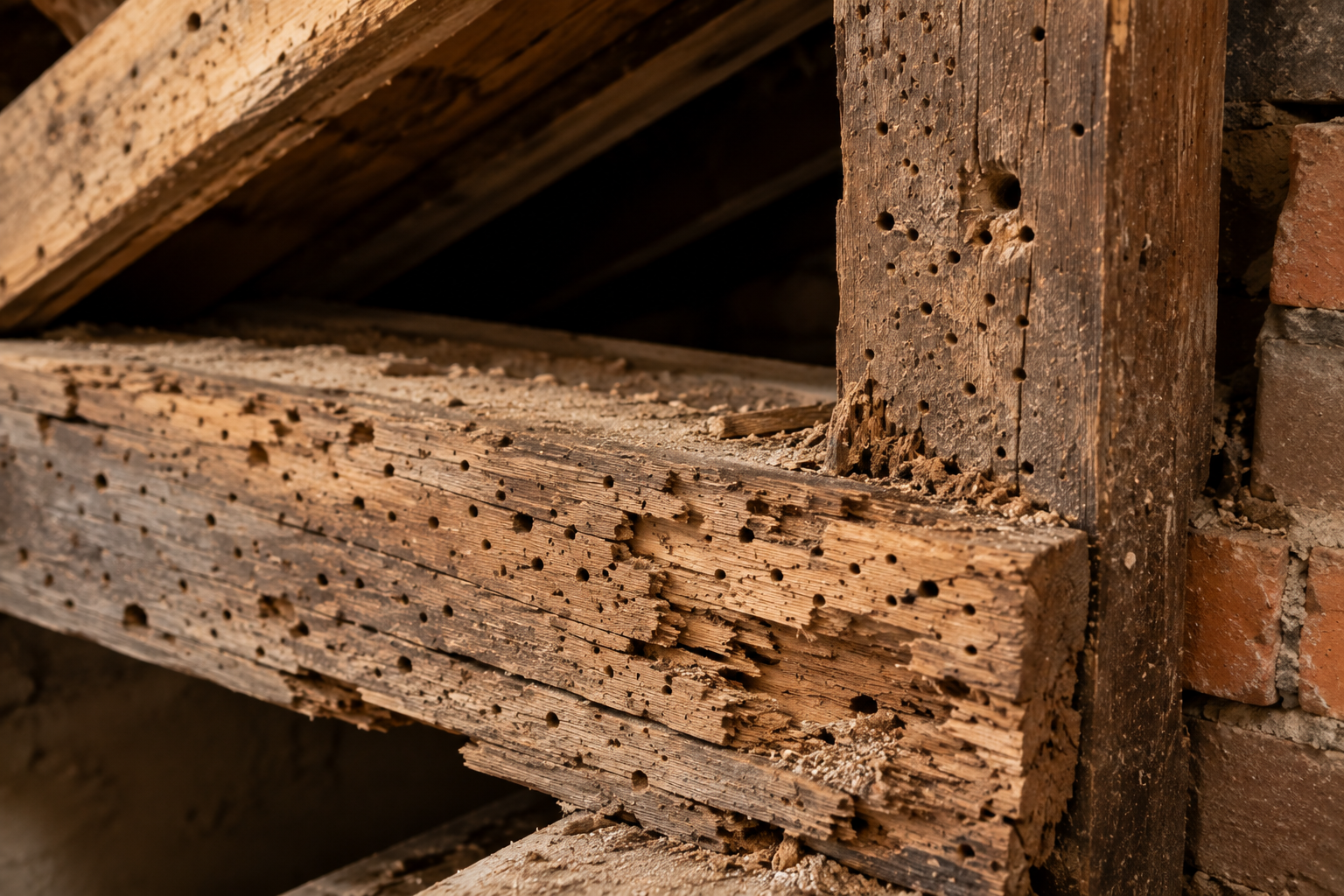
Woodworm is the term commonly used to describe damage caused by the larvae of wood-boring beetles as they feed within timber.
Adult beetles lay their eggs in or around suitable timber. Once the larvae hatch, they can remain inside the wood for an extended period, feeding and creating tunnels before eventually emerging as adult beetles.
Different species favour different conditions and types of timber. Excess moisture can also make some timber more vulnerable to infestation, particularly in poorly ventilated or persistently damp areas.
That’s why effective woodworm control starts with correctly identifying the insect involved and establishing whether an infestation is active.
Our surveyors assess the affected timber, look for evidence of wood-boring insects and determine whether treatment is required before recommending the appropriate next steps.
Signs you may have woodworm
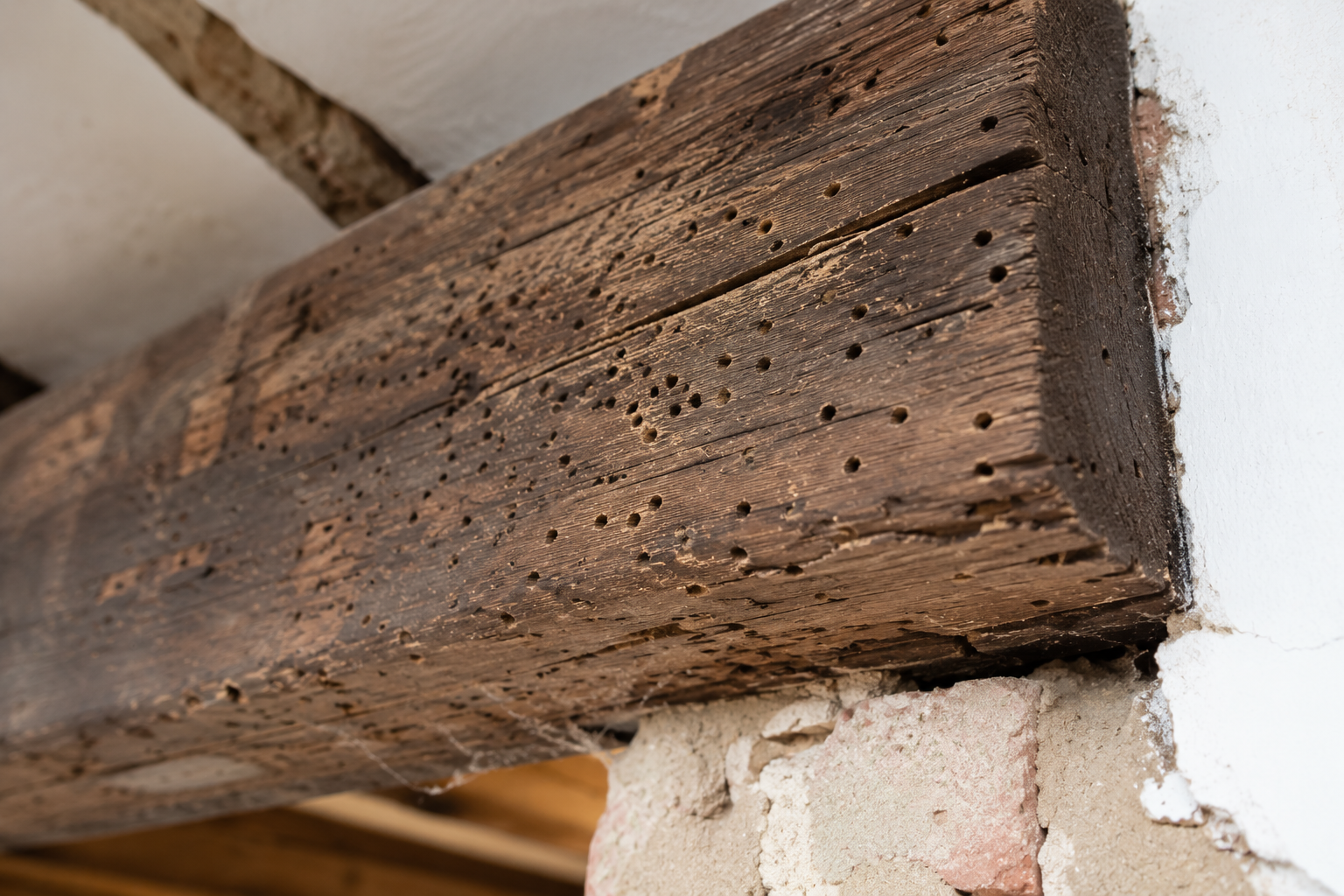
Small holes in timber are one of the most recognisable signs of woodworm, but they don't necessarily mean an infestation is currently active.
Exit holes can remain in timber long after beetles have left, so it’s important to look at the wider evidence before deciding whether treatment is necessary.
Signs that could indicate woodworm include:
- Small round or oval holes in timber
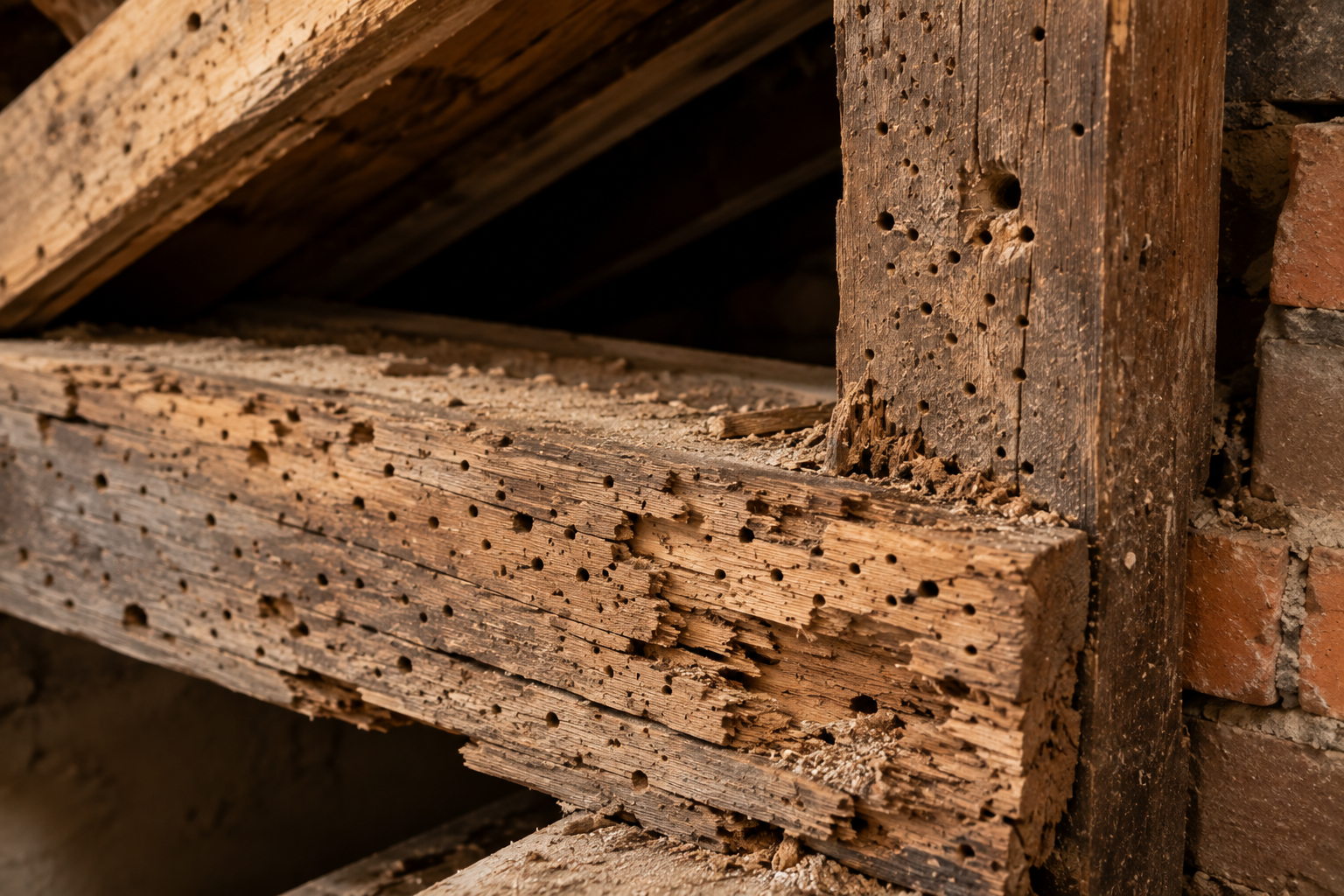
- Fine powder or dust around exit holes
- Tunnels visible within damaged wood
- Weak, brittle or crumbling timber
- Beetles emerging from timber
- Dead beetles around windows or affected areas
- Damage to floorboards, joists or roof timbers
- Fresh-looking holes or dust appearing around timber
KNOW WHAT YOU'RE DEALING WITH
Guesswork costs money. A DBL damp survey identifies the true cause - rising damp, penetrating damp, condensation or timber decay - so the work you pay for actually fixes the problem.
- PCA principlesIndustry-standard practice
- 20 years experienceDamp and timber specialists
- Nationwide coverageSurveys across the UK
- Clear adviceNo pressure, no upselling
Why choose DBL for woodworm control?
Not every hole in a piece of timber means you need woodworm treatment. Correct identification comes first.
Older properties frequently contain timber showing historic evidence of wood-boring insects. Treating timber unnecessarily won't provide any benefit if the infestation is no longer active.
DBL takes a survey-led approach. Our experienced specialists inspect the affected areas, assess the condition of the timber and look for evidence that helps determine the type and activity of the infestation.
Where treatment is necessary, we'll explain the areas affected and recommend an appropriate woodworm control solution. Depending on the findings, this may include specialist treatment of accessible timber alongside repairs where significant damage has occurred.
We'll also consider moisture and ventilation conditions that could be contributing to the problem, helping address the environment surrounding the affected timber rather than simply treating visible holes.
Whether you've discovered suspicious holes in floorboards, exposed roof timbers or signs of wood-boring insects during renovation work, DBL can establish what you're dealing with and advise on the appropriate action.
Found signs of woodworm in your property? Book a survey with DBL and have your timber inspected by experienced damp and timber specialists.