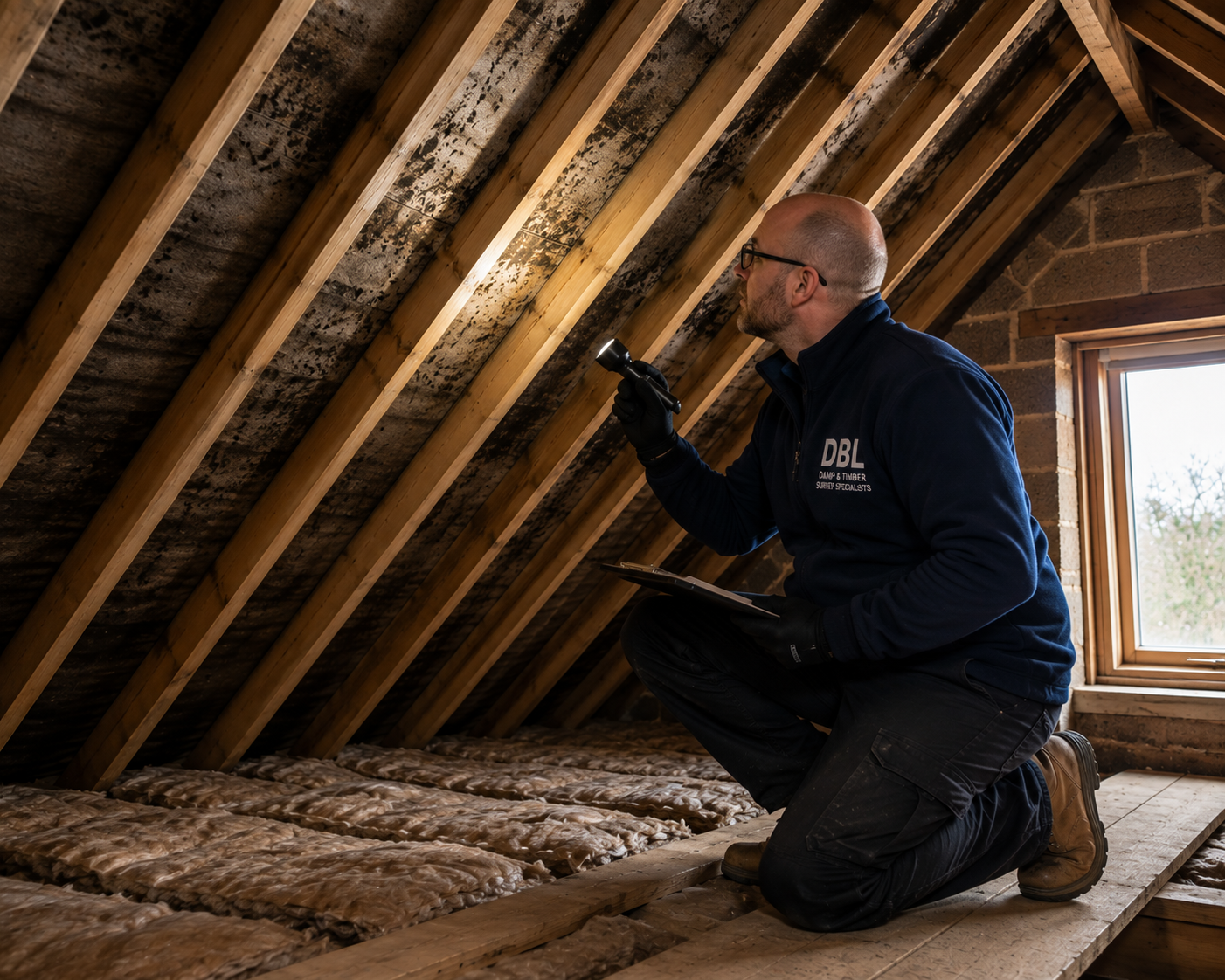
WET ROT REPAIRS THAT DEAL WITH THE DAMAGE.
Wet rot can weaken timber and lead to costly repairs when moisture problems are left unresolved. Our specialists identify the affected timber, find the source of moisture and carry out the necessary repairs to restore and protect your property.
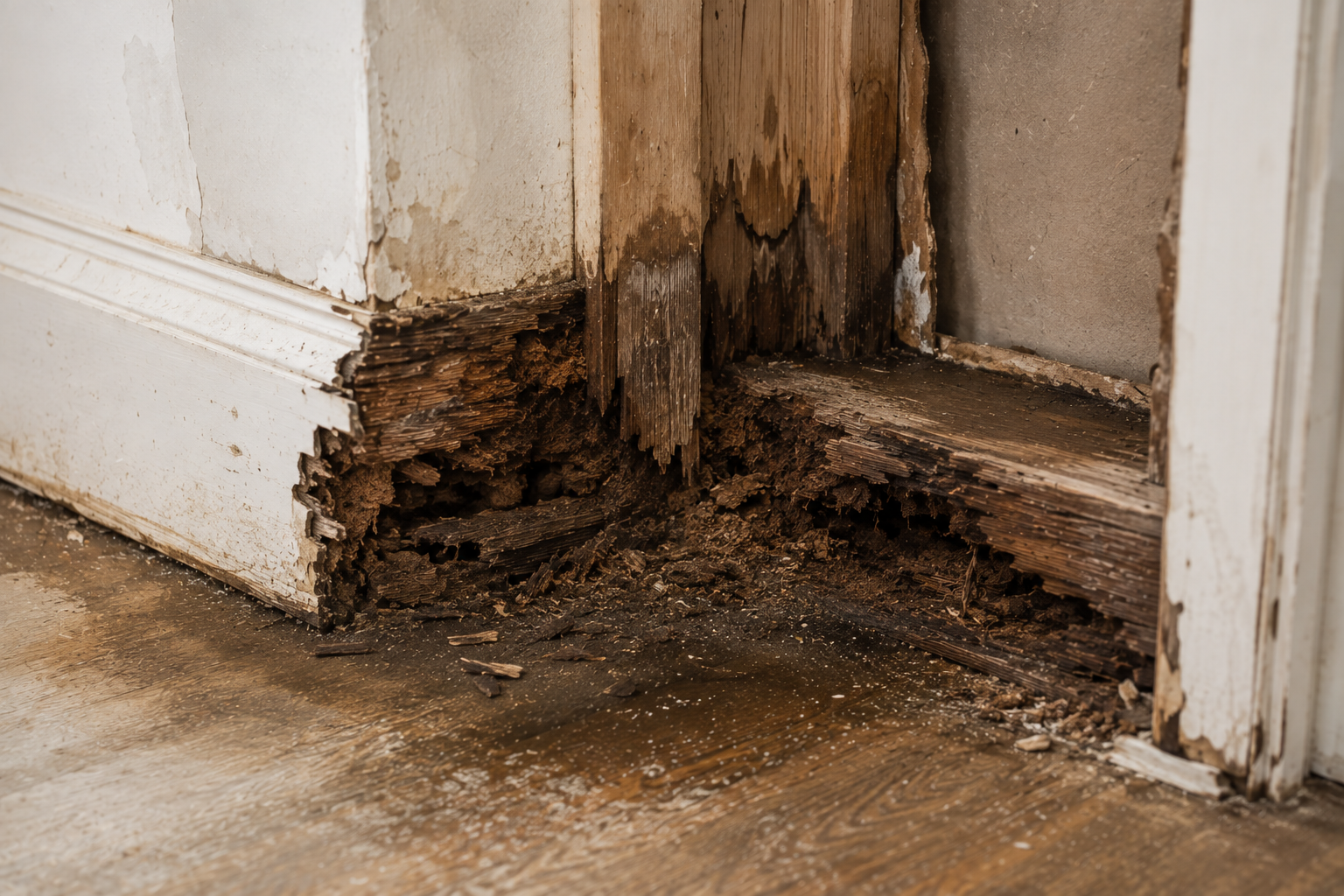
We stop the rot
- Identify Problems Early
- Expert Damp & Timber Surveys
- Effective Treatments
- PCA Registered Experts
What causes wet rot?
Wet rot develops when timber remains exposed to excessive moisture for a prolonged period of time.
Unlike dry timber, consistently damp wood creates the conditions in which wood-decaying fungi can develop. This gradually breaks down the timber, reducing its strength and potentially affecting floors, joists, roof timbers and other parts of the property.
Common causes include leaking plumbing, damaged roofs, defective guttering, penetrating damp, poor external drainage and inadequate ventilation.
The key to dealing with wet rot is identifying and correcting the source of moisture as well as repairing the damaged timber. Without addressing the underlying problem, replacement timber may eventually become affected too.
Our surveyors investigate both the visible timber damage and the conditions that allowed it to develop before recommending the appropriate repairs.
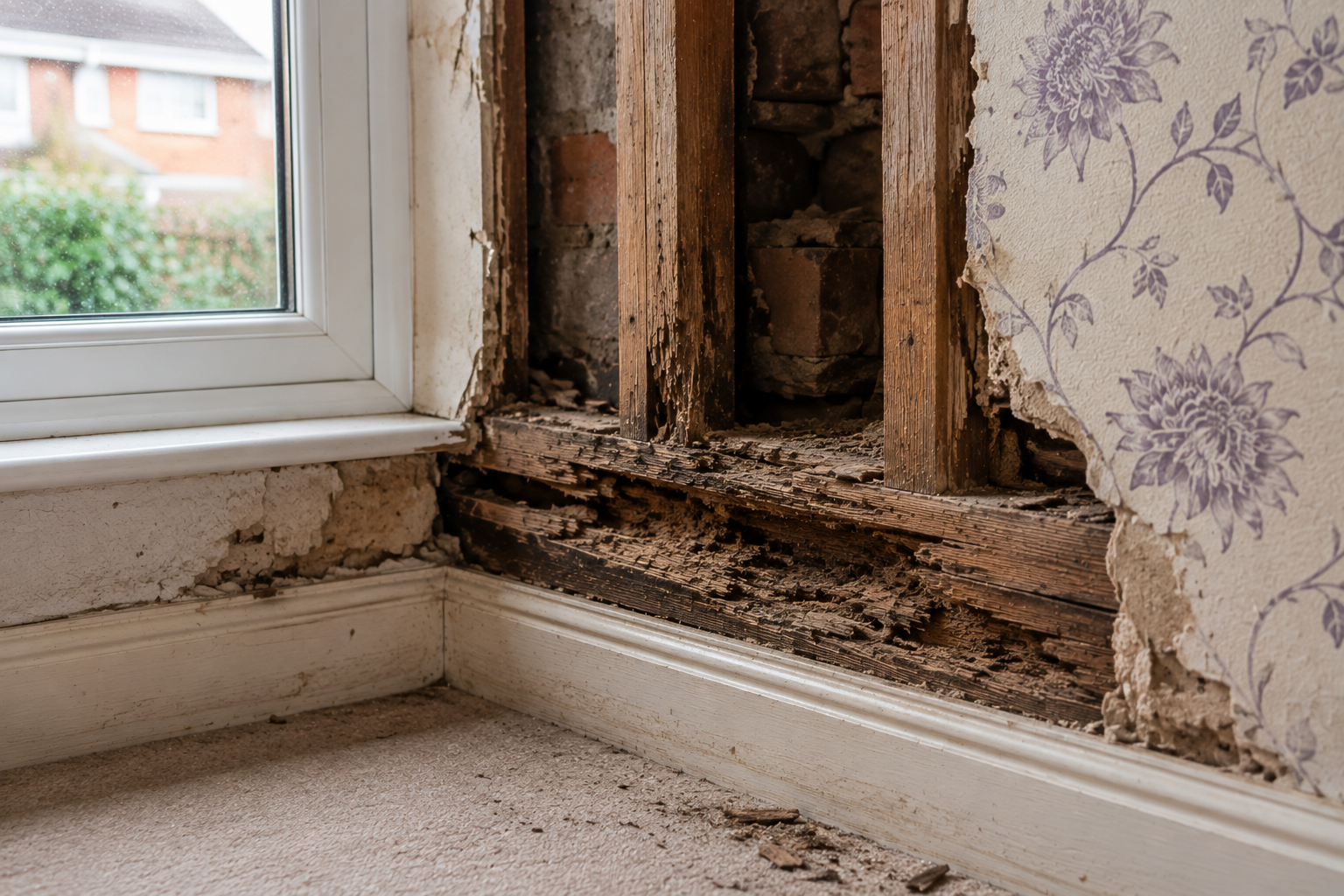
Signs you may have wet rot
Wet rot isn't always immediately visible, particularly when affected timber is beneath floors, behind walls or within roof spaces.
As the decay progresses, timber can lose strength and begin to soften, crack or deteriorate.
Signs that could indicate wet rot include:
Wet rot can sometimes be confused with dry rot or other forms of timber decay. Correct identification is important because the extent of the repair and treatment required can differ considerably.
If you're concerned about damaged or weakened timber, a professional survey can establish the cause and determine what needs repairing.
- Timber that feels soft or spongy
- Darkened or discoloured wood
- Cracking or splitting along the timber
- Timber that crumbles when touched
- Damp or musty smells
- Visible fungal growth
- Bouncing or weakened floorboards
- Deterioration around persistent leaks or damp areas
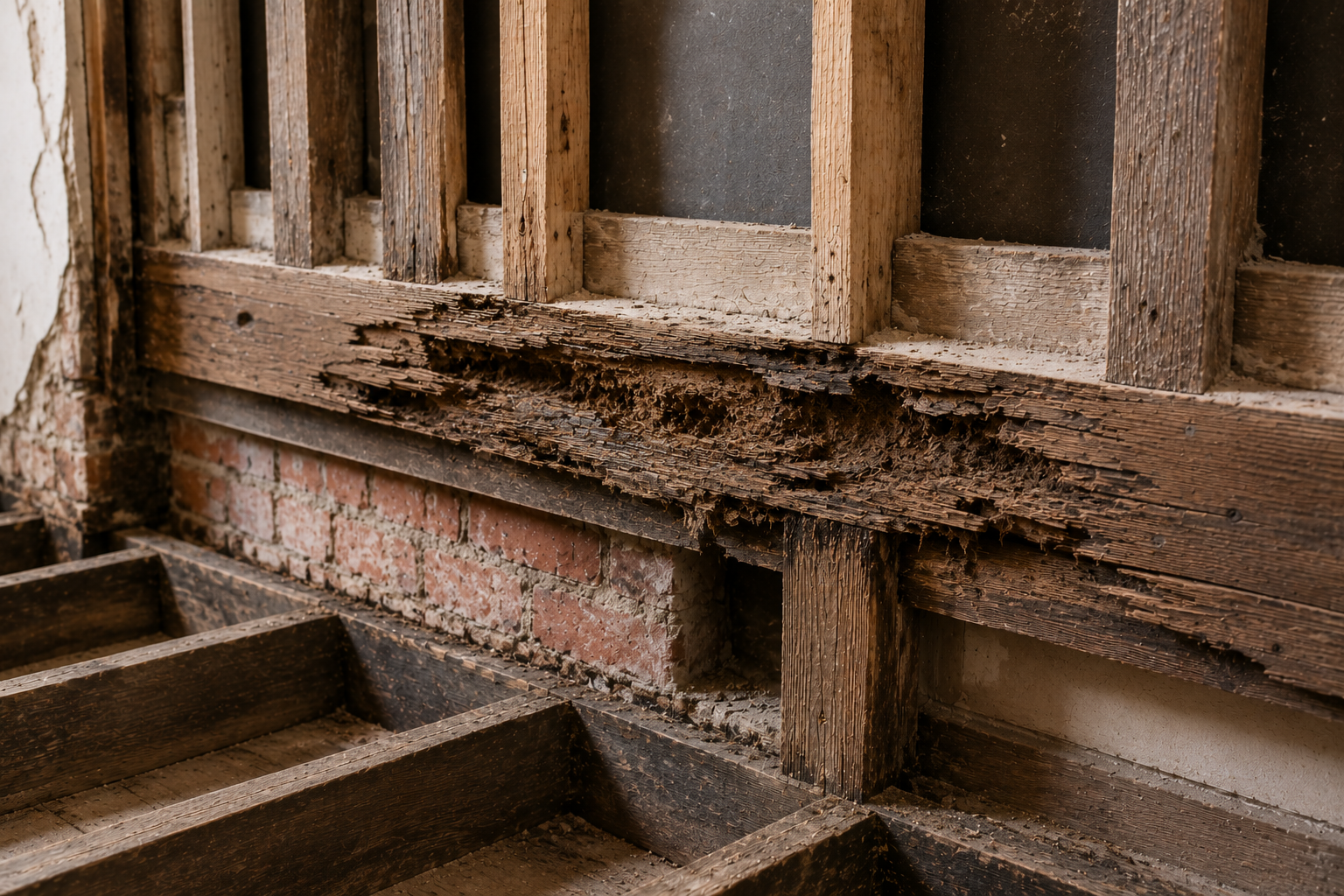
KNOW WHAT YOU'RE DEALING WITH
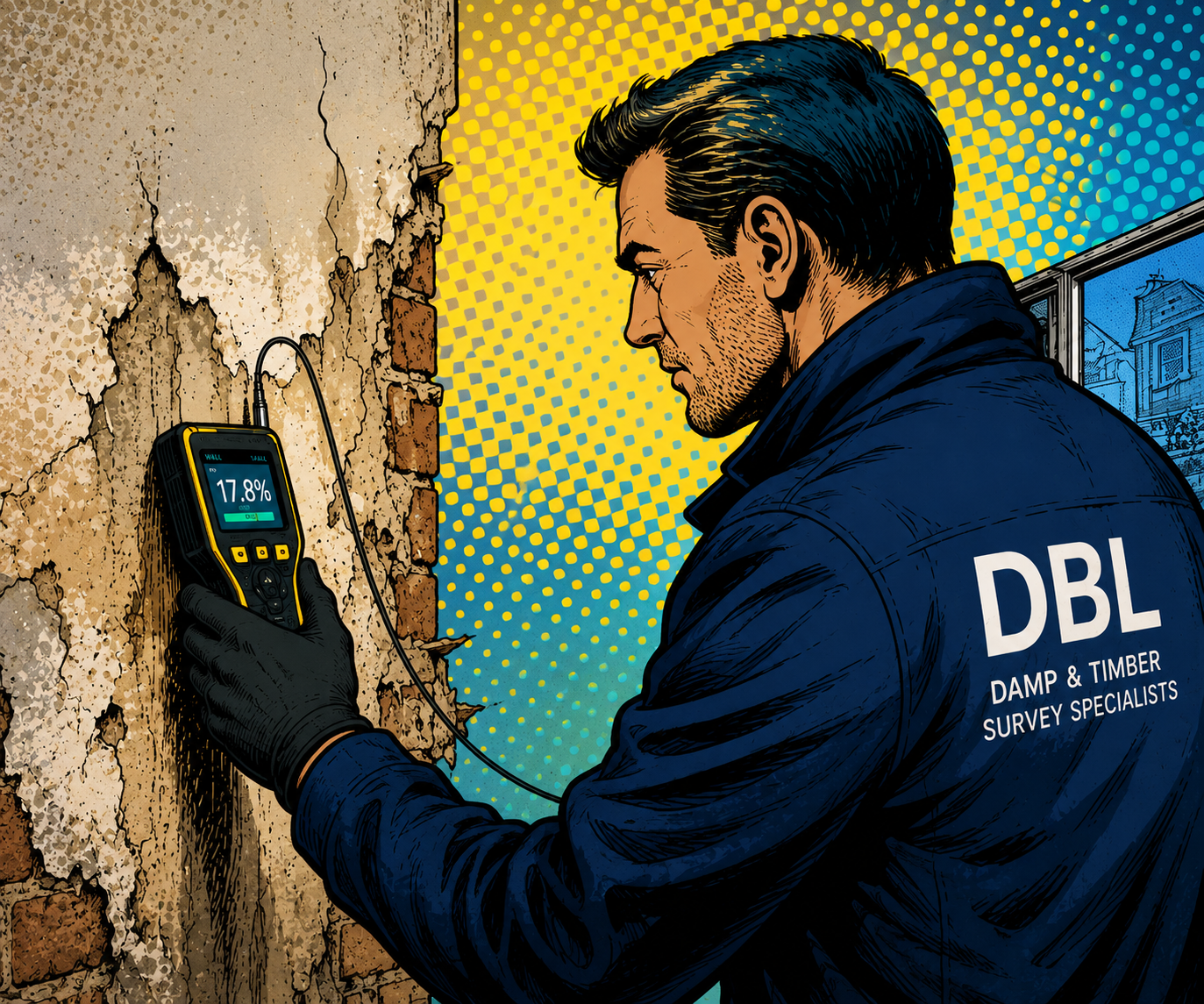
Guesswork costs money. A DBL damp survey identifies the true cause - rising damp, penetrating damp, condensation or timber decay - so the work you pay for actually fixes the problem.
- PCA principlesIndustry-standard practice
- 20 years experienceDamp and timber specialists
- Nationwide coverageSurveys across the UK
- Clear adviceNo pressure, no upselling
Why choose DBL for wet rot repairs?
Repairing wet rot properly means dealing with both the damaged timber and the moisture that caused it.
Replacing visibly rotten wood without investigating the source of the problem can provide only a temporary solution. If excessive moisture remains, surrounding or replacement timber may also become vulnerable to decay.
DBL takes a diagnosis-first approach. Our experienced surveyors assess the condition of the timber, establish the extent of the damage and investigate where the excess moisture is coming from.
Once we understand the problem, we'll explain what can be retained, what may need repairing or replacing and what should be done to prevent the conditions from returning.
Depending on the extent and location of the damage, repairs may involve removing decayed sections, replacing affected structural timber and addressing associated damp or ventilation problems.
Whether you've discovered rotten floorboards, damaged joists or suspicious timber during renovation work, DBL can identify the problem and recommend the appropriate repair.
Concerned about rotten or weakened timber? Book a survey with DBL and have the affected area inspected by experienced damp and timber specialists.