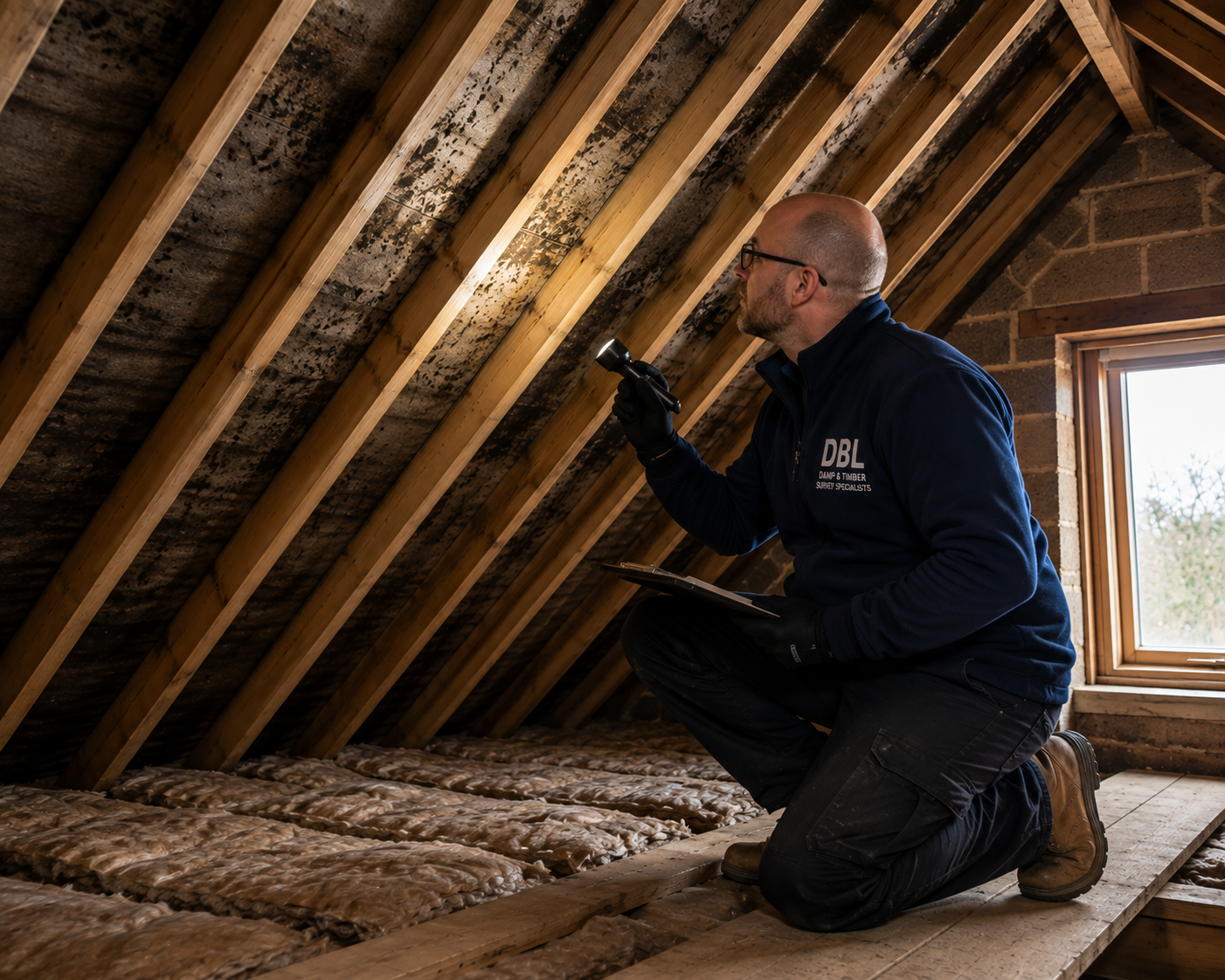
DRY ROT TREATMENT THAT STOPS THE SPREAD.
Dry rot can cause serious damage to structural timber if left untreated. Our specialists identify the source and extent of the outbreak, remove affected material where necessary and provide targeted treatment to protect your property from further decay.
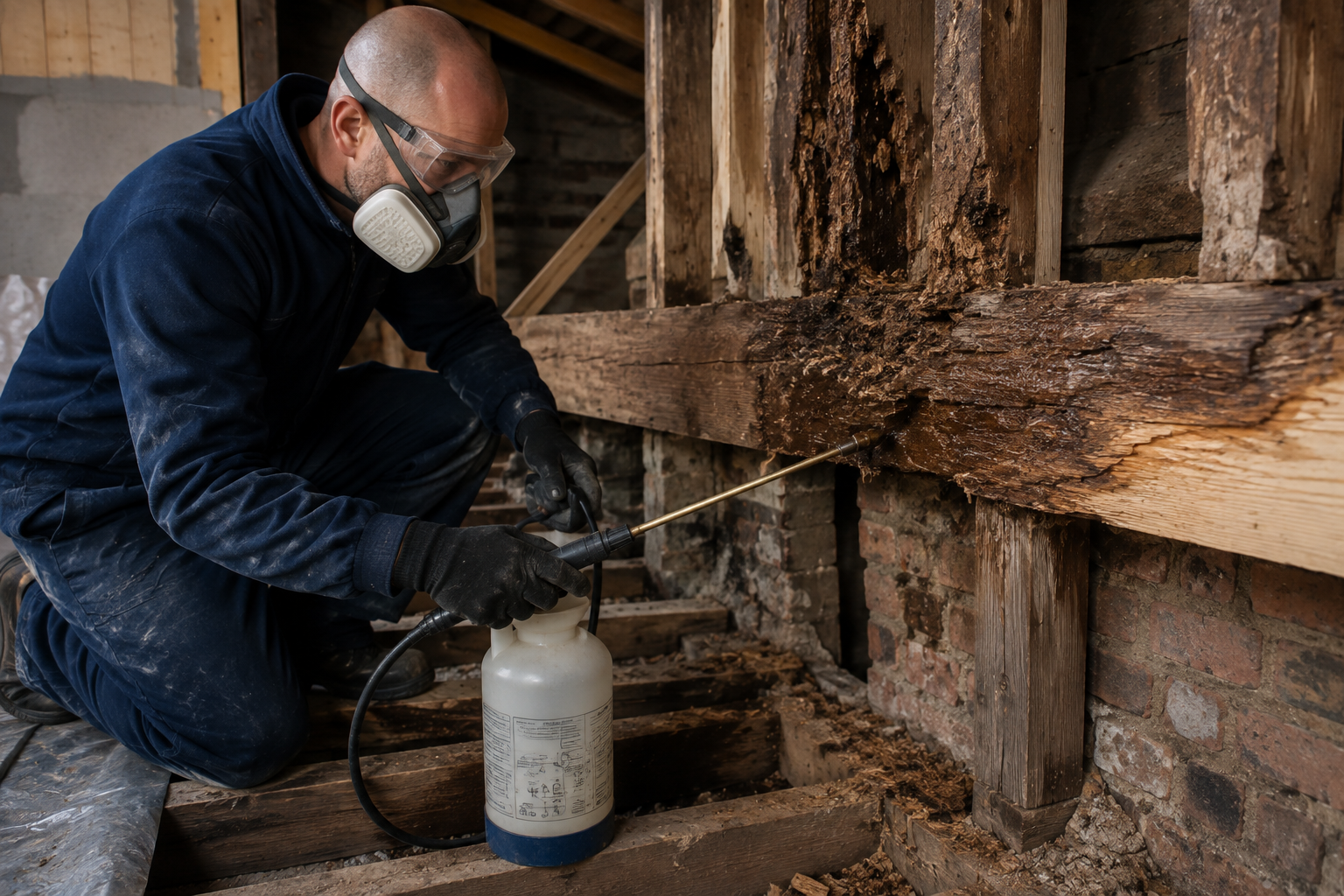
We stop the rot
- Identify Problems Early
- Expert Damp & Timber Surveys
- Effective Treatments
- PCA Registered Experts
What causes dry rot?
Dry rot develops when timber is exposed to the moisture conditions that allow wood-destroying fungus to grow.
Despite its name, dry rot needs moisture to develop. Problems often begin where timber has been exposed to persistent dampness caused by leaking pipes, defective gutters, penetrating damp, poor ventilation or other building defects.
Once established, dry rot can spread through affected timber and, in some circumstances, across surrounding building materials in search of another source of timber.
Effective treatment therefore means doing more than dealing with the visible fungus. We identify the moisture source, assess how far the decay has progressed and determine what remedial work is required to address the outbreak properly.
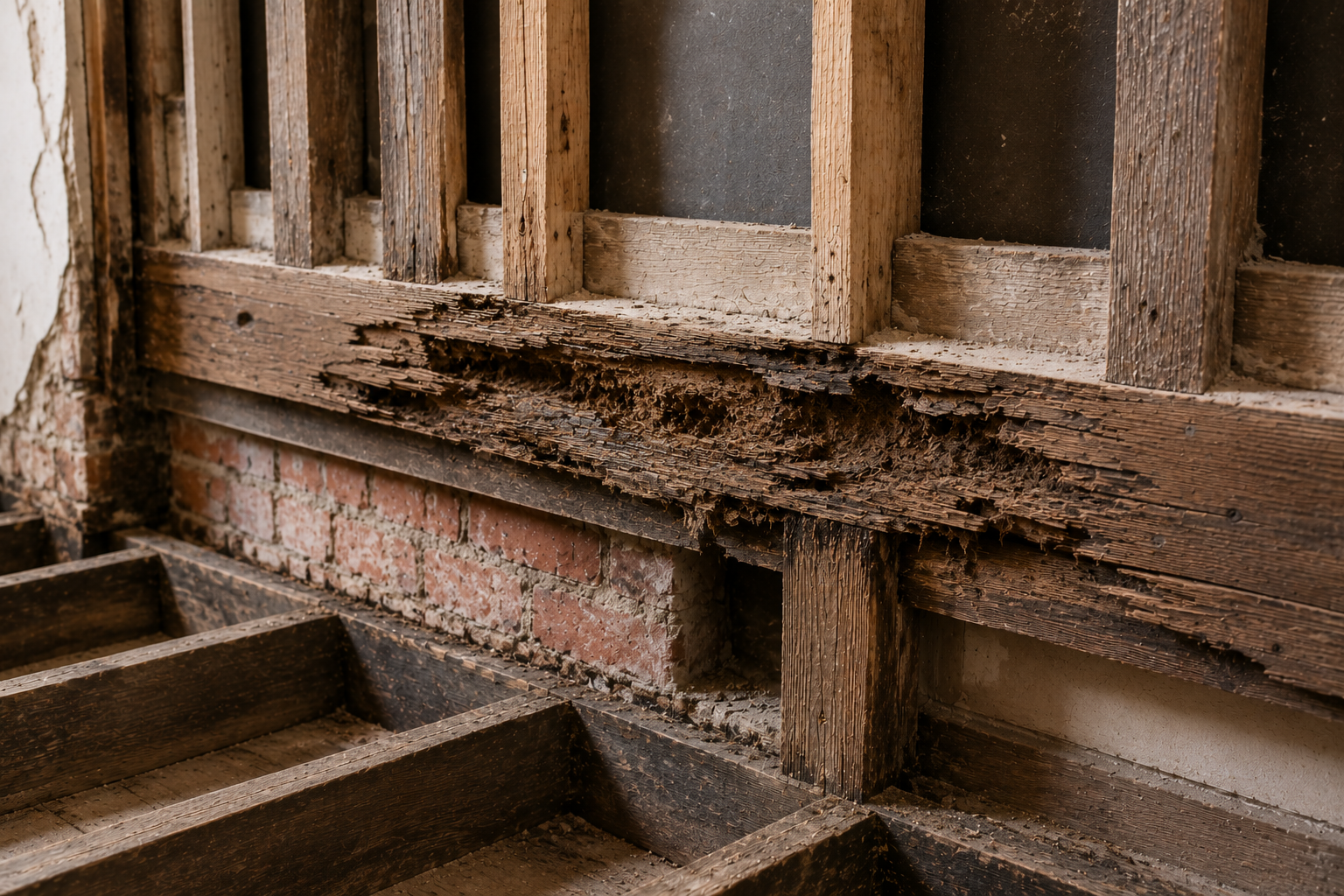
Signs you may have dry rot
Dry rot can develop in concealed areas, so recognising the warning signs early can help prevent more extensive timber damage.
Outbreaks may occur beneath floors, behind plaster, within roof spaces and in other areas where moisture and timber are present.
Signs to look out for can include:
Not every form of timber decay is dry rot. Wet rot and other timber problems can produce similar symptoms, which is why identifying the type and cause of decay is essential before treatment begins.
- Timber that appears cracked or brittle
- Wood breaking into distinctive cube-like sections
- Soft, weakened or crumbling timber
- White or grey fungal growth on timber
- Orange or rust-coloured fruiting bodies
- Fine reddish-brown spore dust
- A persistent damp or mushroom-like smell
- Floors or timber that feel weakened or unstable
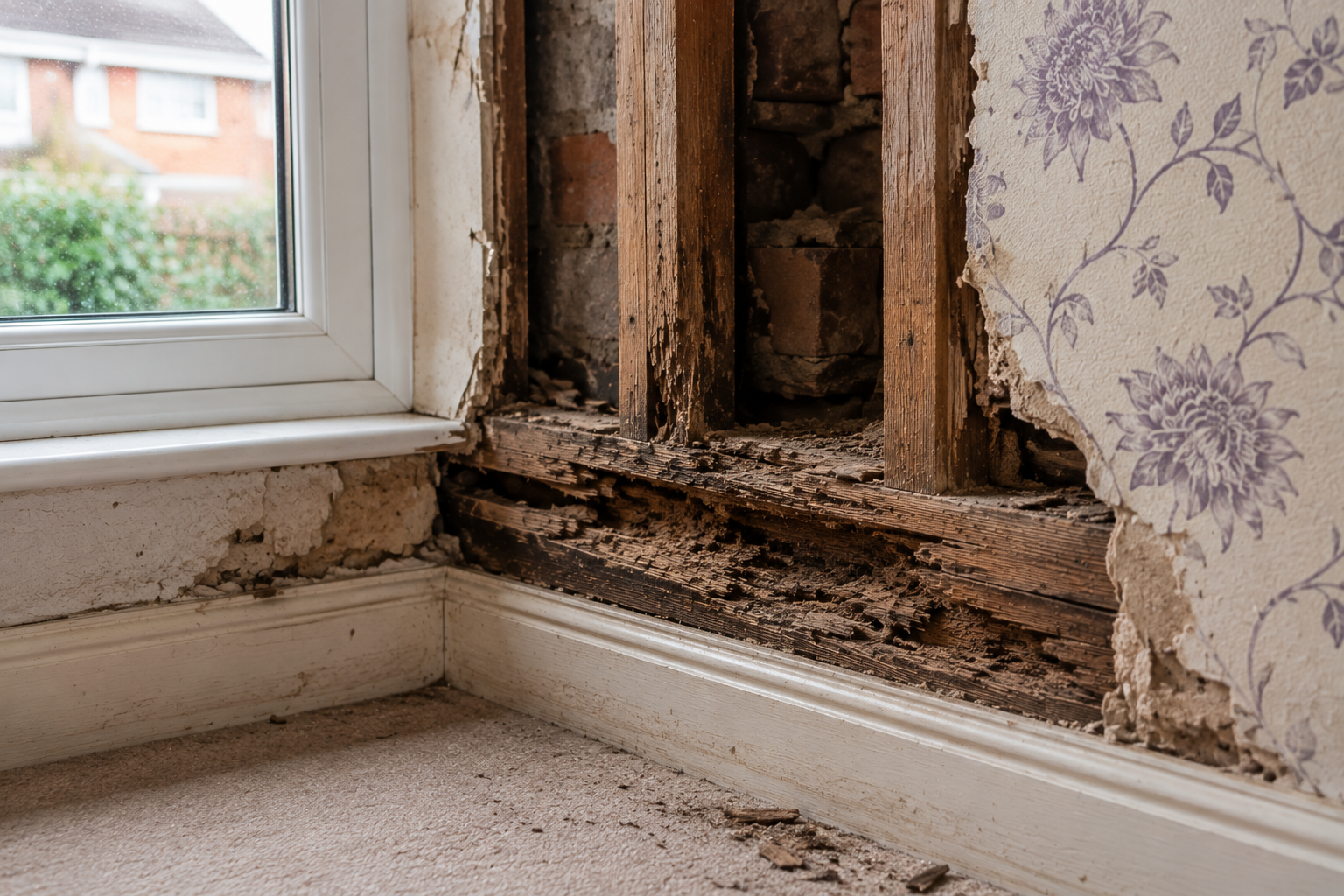
KNOW WHAT YOU'RE DEALING WITH
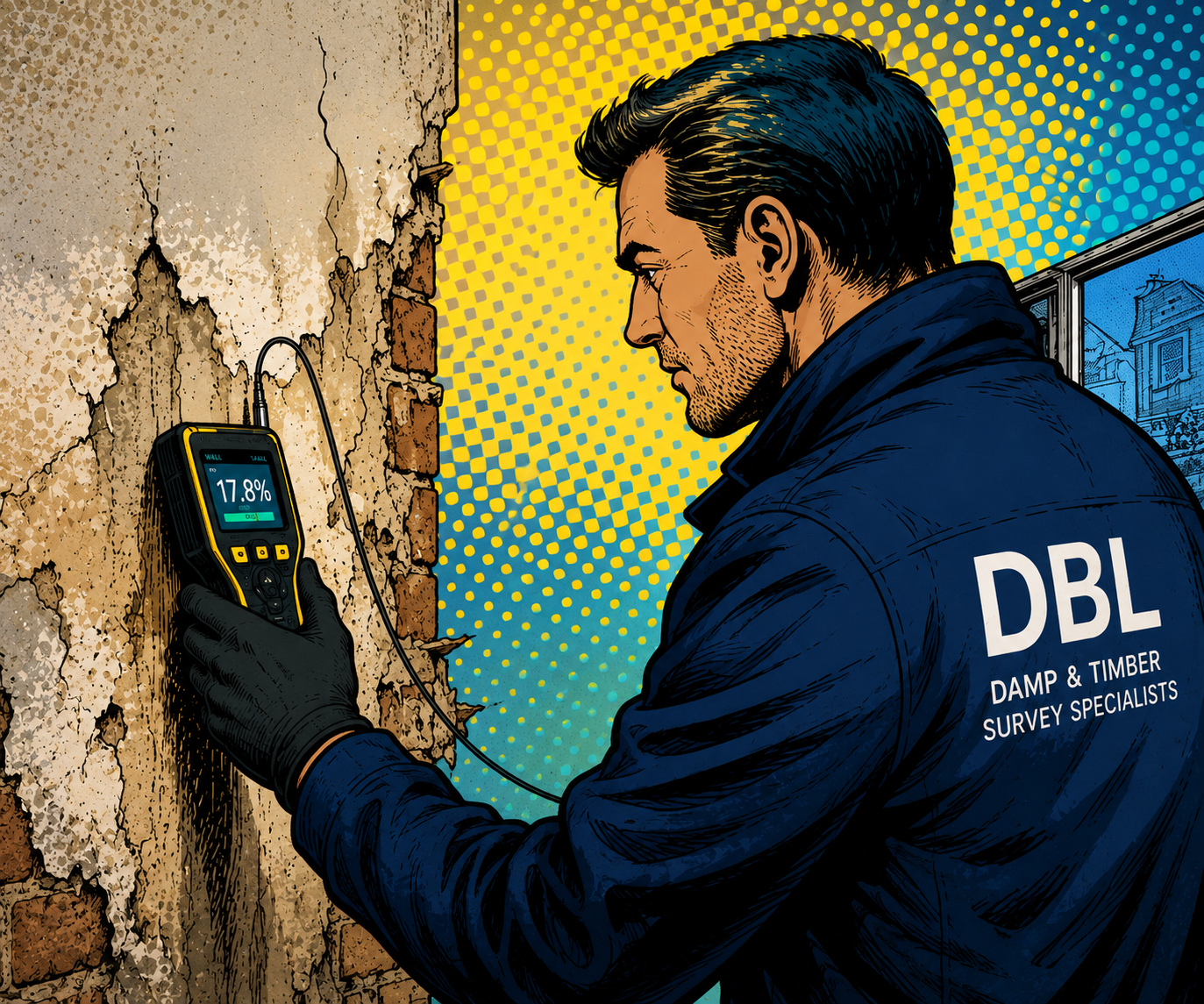
Guesswork costs money. A DBL damp survey identifies the true cause - rising damp, penetrating damp, condensation or timber decay - so the work you pay for actually fixes the problem.
- PCA principlesIndustry-standard practice
- 20 years experienceDamp and timber specialists
- Nationwide coverageSurveys across the UK
- Clear adviceNo pressure, no upselling
Why choose DBL for dry rot treatment?
Successful dry rot treatment starts with finding out why the outbreak developed in the first place.
Simply removing visible fungal growth isn't enough. If the moisture source remains or affected areas are overlooked, timber decay can continue and potentially cause further damage to the property.
DBL takes a thorough, diagnosis-led approach. Our experienced surveyors assess the affected timber, investigate the extent of the outbreak and look for the moisture conditions allowing it to develop.
Where treatment is required, we'll explain which areas are affected, what remedial work we recommend and how the underlying moisture problem should be addressed.
Depending on the extent of the outbreak, this may involve removing severely decayed timber, specialist treatment of affected areas and recommendations for correcting the source of moisture.
Whether you've discovered suspicious fungal growth, weakened floorboards or signs of timber decay during renovation work, DBL can determine what you're dealing with and recommend the appropriate next steps.
Concerned you may have dry rot? Book a survey with DBL and have the affected area assessed by experienced damp and timber specialists.